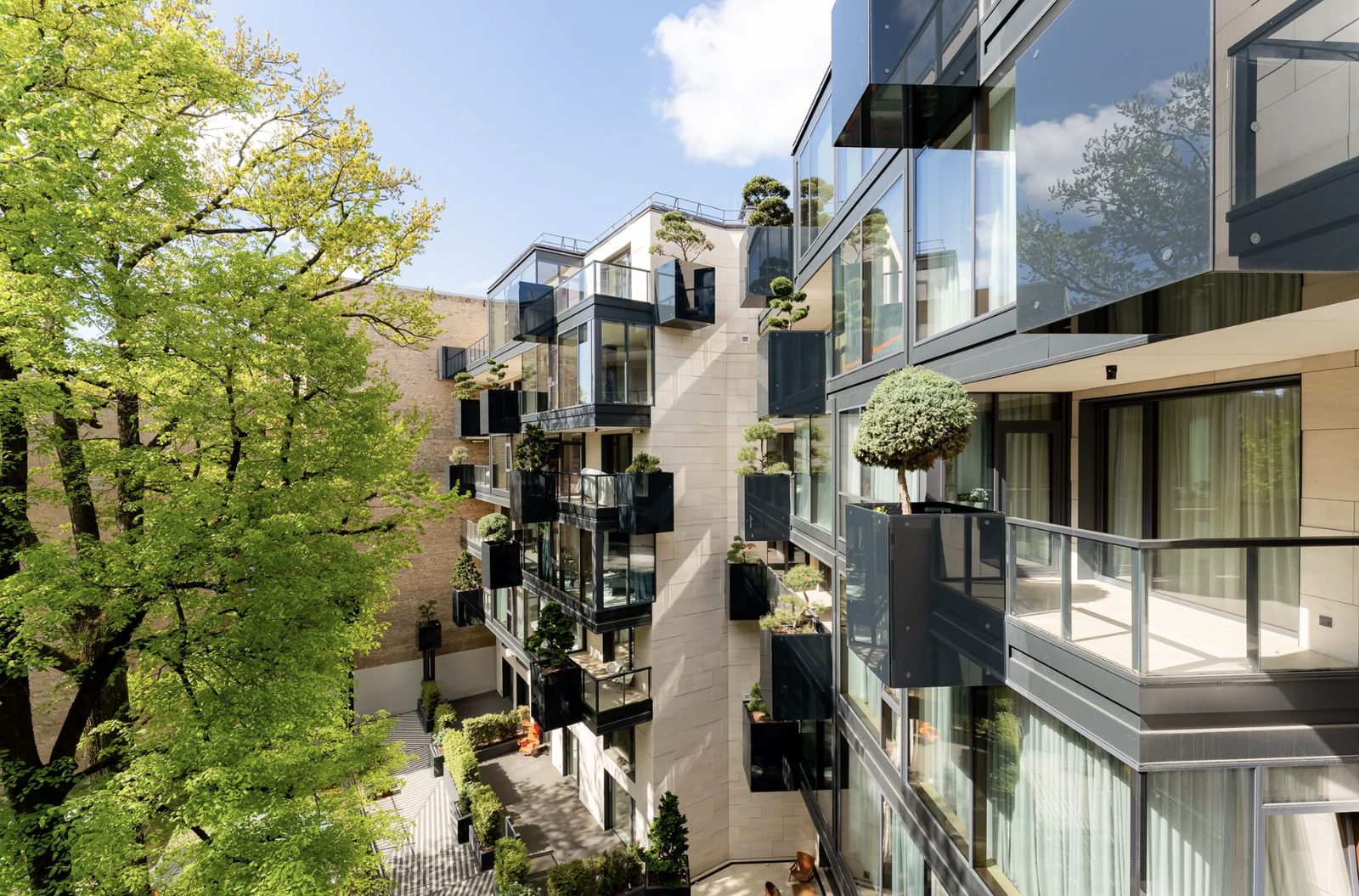
Beautiful apartment for sale in a unique residential building HOFT, in the quiet centre of Riga, Strēlnieku iela 5.
Market Intelligence · Latvia · September 2026
Riga, Latvia Property Intelligence for Americans: What Actually Changed When the Golden Visa Ended in 2026

Peter Tumbas
Licensed Connecticut Real Estate Agent · Berkshire Hathaway HomeServices New England Properties · License RES.0836133
Editorial intelligence only. Not legal, tax, or immigration advice. IRS worldwide income reporting obligations apply to all US citizens regardless of where they own property or reside. Engage qualified specialists before making any decision based on this content.
Quick Answer for Americans
What changed: Effective September 15, 2026, Latvia's new Immigration Law ended the property-purchase basis for a new temporary residence permit, along with the separate subordinated-bank-deposit route. Latvia's migration authority, PMLP, confirmed this directly.
What didn't: Buying an apartment in Riga as an ordinary foreign purchase remains a separate, generally open question, subject to the usual title, land-use, tax, and compliance review any cross-border purchase requires. Owning property and holding a residence permit are now disconnected for any new applicant.
What's left for residency: A company share-capital investment route remains active, subject to a minimum investment, a state fee, and ongoing tax obligations. A new EUR 150,000 fund route exists in the statute but is not yet usable, because the qualifying fund has not been established.
If you're still seeing a Riga apartment pitched as a direct path to EU residency, that pitch is describing a rule that stopped applying on September 15, 2026.
Latvia's Office of Citizenship and Migration Affairs, known as PMLP, confirmed that a new Immigration Law took effect September 15, 2026, after adoption by the Saeima on August 20. The law ended two things at once: the option to obtain a temporary residence permit through a qualifying real estate purchase, formerly requiring property worth at least EUR 250,000, and the separate option to obtain one through a EUR 280,000 subordinated bank deposit. Neither route is available to a new applicant. What the law did not touch is the ordinary sale of real estate to a foreign buyer, which remains a distinct legal question from residency and is addressed further below.
What exactly changed on September 15, 2026?
PMLP's own statement is the clearest source here: the new Immigration Law no longer allows a temporary residence permit to be granted on the basis of a real estate purchase or a subordinated bank liability. The former property-linked route required qualifying real estate worth at least EUR 250,000 and is no longer available for new applications. The former subordinated-deposit route, requiring EUR 280,000, ended the same way. Anyone who already holds a permit obtained under the prior rules keeps it until expiration, and some pre-change applications may fall under transition arrangements, but that is not the same as a currently available property route for someone starting fresh today.
Two investment-based routes remain. Investment in the share capital of a qualifying Latvian company continues to be available, subject to a minimum investment amount, a state fee, and ongoing tax-payment requirements that should be reviewed with a Latvian corporate and immigration attorney, since the exact obligations depend on the structure used. A newer route written into the same law would allow a EUR 150,000 investment through a state-established alternative-investment-fund manager, but PMLP states the required fund has not yet been established. That route exists on paper, not yet in practice.
If you're evaluating Riga as a safe haven alongside other European markets, submit a private inquiry and Peter will walk through your residency, tax, and property options at no cost to you. Referral fees are paid by the receiving agent at close. Start here.
Can Americans still buy property in Riga as an ordinary purchase?
Buying an apartment and securing the right to reside in Latvia are now two entirely separate questions, and it is worth stating plainly: owning Riga real estate no longer creates any immigration pathway by itself. Set that aside, and the ordinary buyer question remains generally favorable. Foreigners, including Americans, are broadly able to purchase apartments and residential buildings through Latvia's standard notarial process. That should not be read as a blanket legal guarantee for every property, however. Buyer eligibility, the property's land-use classification, sanctions and anti-money-laundering screening, title condition, financing, and applicable tax rules all still require review by a Latvian notary or attorney for the specific transaction, and a buyer should treat any general description of the process, including this one, as a starting point rather than a substitute for that review.
The clearest additional restriction applies to agricultural land, forest land, and property in border or protected zones, where non-EU and non-EEA buyers face tighter rules than for an ordinary residential apartment. This is unlikely to affect a buyer purchasing a standard apartment in central Riga, but it should be confirmed through the property's official land classification before any commitment, particularly outside the capital.
"The old shorthand was 'buy a EUR 250,000 Riga apartment and get EU residency.' That specific sentence is no longer true for anyone applying today, and I'd rather correct it plainly than let it linger. What's still true is that Riga is a functioning, open market for a foreign buyer who wants the property on its own terms, lifestyle, rental income, diversification, without treating it as an immigration shortcut it no longer is."
What do Riga prices and rental yields actually look like?
Crowdsourced pricing data compiled from Numbeo puts central Riga apartment asking prices around EUR 2,791 per square metre as of 2026, but that figure hides substantial range: older Soviet-era flats can be found closer to EUR 865 per square metre, while new-build units run considerably higher. Treat any single city-centre average as a starting reference rather than a number to underwrite against, since the spread by building age, condition, and exact location is wide, and asking prices are not the same as closed transaction prices.
Gross rental yield data from Global Property Guide, dated Q2 2026, puts Riga's overall average around 7.47%, with meaningful variation by unit size: studios around 6.67%, one-bedrooms around 7.20%, two-bedrooms the strongest at roughly 8.34%, and larger units in the 7.5% to 7.6% range. Submarket figures for central Centrs, Agenskalns, and Vecriga generally run lower than the city-wide average, often in the 5.2% to 6.7% band depending on unit size. These are explicitly gross figures, before tax, repair costs, and other expenses, and the source itself notes that net yields typically run 1.5 to 2 percentage points lower. A buyer should model net returns independently rather than relying on any quoted gross figure as a forecast of what actually lands in hand.
A Note on How This Works
Peter connects serious American buyers with vetted agents and notaries in Latvia. There's no fee to you, referral compensation is paid by the receiving agent at close. If you're ready to go deeper on Riga, request a private inquiry at safehavensforamericans.com/pages/contact.
Request a Private InquiryIs Riga safe for Americans, and what about the Russian border?
The US State Department rates Latvia Level 1, Exercise Normal Precautions, its lowest advisory tier, describing Latvia as generally a safe destination for travelers. That rating is a personal-travel-safety assessment, not an investment-risk rating, and it says nothing directly about regulatory stability, currency exposure, market liquidity, or rental-market risk, the categories that actually matter for a property decision. It should inform a traveler's expectations, not anchor a property investment thesis on its own.
Latvia is a full EU and NATO member state, and it shares a direct land border with both Russia and Belarus, a genuine geopolitical fact that belongs in any serious evaluation of the Baltic states given the current regional security environment. That border situation is a separate question from the travel advisory and should be weighed on its own terms, informed by independent geopolitical analysis rather than a travel-safety rating that was not designed to speak to it. Riga itself sits in the country's northwest, geographically removed from that border.
Who should look at Riga, and who should not
Riga suits an American buyer interested in a lower-entry-price EU capital with above-average gross rental yields in certain unit types, who is not seeking a residency outcome tied to the purchase and who is prepared to do the same title, land-use, and tax diligence any serious cross-border purchase requires. The ordinary buying process itself is not unusually complicated, and the tax treaty relationship between the US and Latvia has been in force since 1998.
Riga is the wrong starting point for any American specifically shopping for EU residency or a citizenship pathway through property, since that door closed on September 15, 2026, and the two remaining investment routes are either a company-formation commitment with ongoing obligations or a fund structure that is not yet operational. For that buyer, Malta's MPRP or Greece's Golden Visa, both still active property-based residency routes as of this writing, remain the more direct comparison on this platform, and either should be independently reconfirmed before acting, since these programmes are subject to their own changes.
Frequently asked questions
Can Americans still buy property in Riga, Latvia?
Generally, yes, through the standard notarial process, but this is subject to ordinary transaction requirements, title, land classification, AML screening, tax, and financing, that should be confirmed by a Latvian notary or attorney for the specific property. Agricultural, forest, and border-zone land carries additional restrictions for non-EU buyers.
Does buying property in Latvia still grant Americans residency?
No. Latvia's new Immigration Law, effective September 15, 2026, ended both the property-purchase route and the subordinated-bank-deposit route to a new temporary residence permit, per PMLP's own confirmation. Existing permit holders keep their status. Owning property and holding residency are now separate questions for any new applicant.
What residency-by-investment routes remain in Latvia?
A company share-capital investment route remains active, subject to a minimum investment, a state fee, and ongoing tax obligations. A new EUR 150,000 alternative-investment-fund route exists in the law but is not yet usable, since PMLP states the qualifying fund has not been established.
Is Riga safe for Americans, and what about the Russian border?
The State Department rates Latvia Level 1, its lowest advisory tier, a personal-travel-safety rating, not an investment-risk assessment. Latvia is a full EU and NATO member bordering Russia and Belarus, a genuine fact worth independent evaluation. Riga sits in the northwest, away from that border.
Last updated: September 2026. Latvian immigration law, property law, pricing, and yield figures are subject to change and vary by source; price and yield data cited above are drawn from Numbeo (crowdsourced asking prices) and Global Property Guide (Q2 2026 gross yields) respectively, and should be independently verified before use in any underwriting decision. Confirm the current residency-route status and all transaction specifics with a licensed Latvian notary, an independent Latvia-qualified attorney, and a US CPA with international property experience before making any decision. Not legal, tax, or immigration advice. IRS worldwide income reporting obligations apply to all US citizens regardless of where they own property or reside.
About the Author. Peter Tumbas is a licensed Connecticut real estate agent with Berkshire Hathaway HomeServices New England Properties (License RES.0836133). He focuses on offshore real estate, safe-haven strategy, and helping high-net-worth Americans evaluate international markets for residency, tax efficiency, and capital preservation. This briefing is part of the Safe Havens for Americans research framework, which evaluates 22 international markets for high-net-worth Americans using the same analytical approach as private wealth offices.
Considering Riga?
If you're a high-net-worth American evaluating Riga or the wider Baltic region for property or capital placement, submit a private inquiry here: safehavensforamericans.com/pages/contact. You can also call 412-225-0598 or email petertumbas@bhhsne.com directly. No cost to you, referral fees are paid at close by the receiving agent.
Submit a Private InquiryRelated reading: Warsaw Property Intelligence for Americans: Ownership Law, Safety, and the Residency Gap in 2026 · Lisbon vs. Malta: The Iberian Value Play Against the EU's Easiest Residency for Americans · Bali Property Intelligence for Americans: Ownership Structures, the Golden Visa, and What to Watch in 2026 · How Peter Tumbas Evaluates International Markets