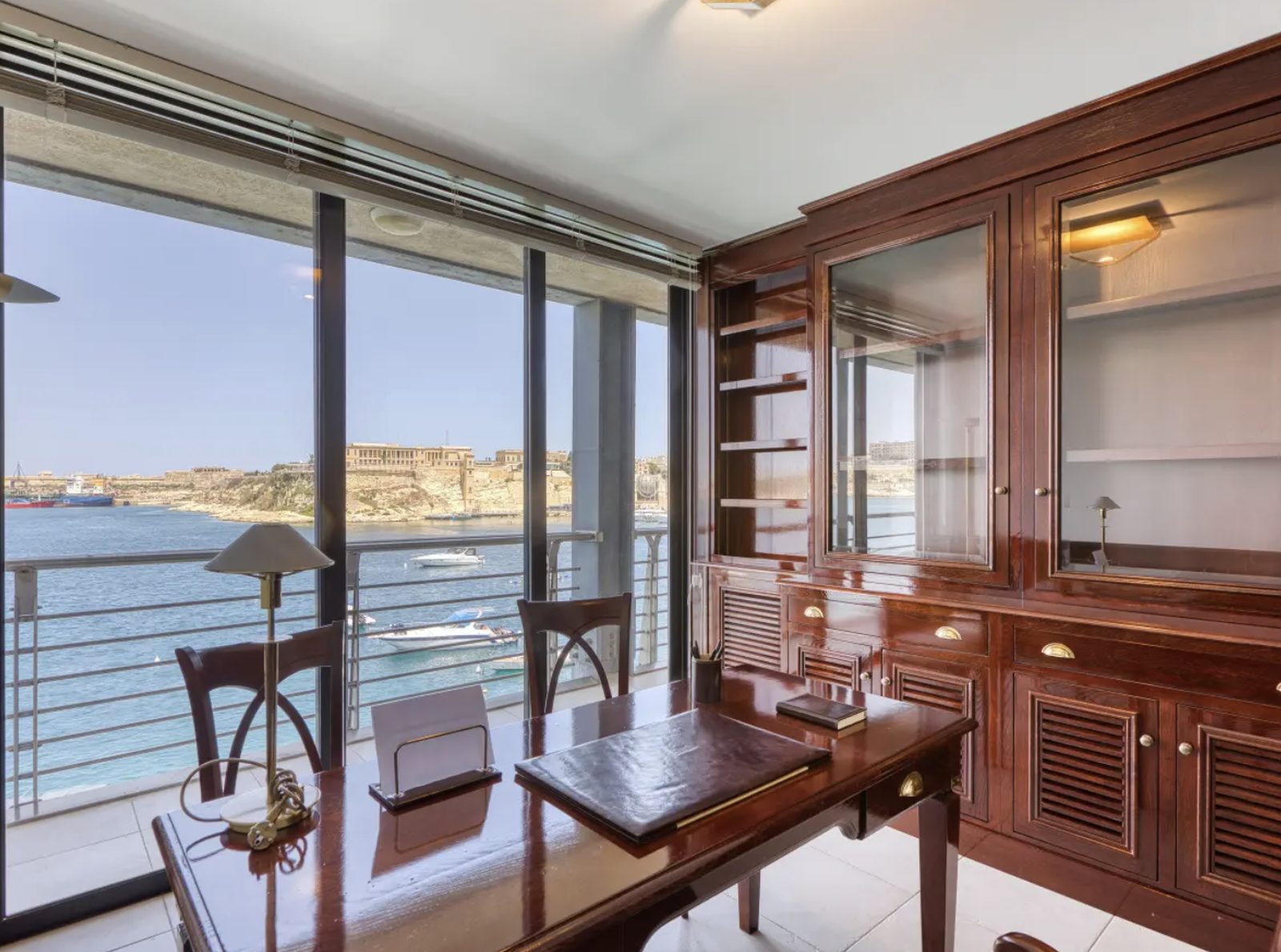
A private residence overlooking Grand Harbour, Malta.
Comparative Markets · Latin America & European Union · September 2026
Uruguay vs. Malta: The Americas' Rule-of-Law Anchor Against the EU's Easiest Residency for Americans in 2026

Peter Tumbas
Licensed Connecticut Real Estate Agent · Berkshire Hathaway HomeServices New England Properties · License RES.0836133
Editorial intelligence only. Not legal, tax, or immigration advice. IRS worldwide income reporting obligations apply to all US citizens regardless of where they own property or reside. Engage qualified specialists before making any decision based on this content.
Quick Answer for Americans
Best for the lowest-friction residency route: Uruguay. The 183-day presence route requires no property purchase and no minimum investment at all, a structural simplicity Malta cannot match.
Best for EU access specifically: Malta. The MPRP grants genuine EU permanent residency, something Uruguay, outside the EU entirely, structurally cannot offer at any price.
Best for US tax treaty protection: Malta. Uruguay has no tax treaty with the United States; Malta does, a genuine structural advantage for buyers expecting meaningful local income.
Use Uruguay if the objective is the simplest possible residency route backed by two decades of proven democratic stability. Use Malta if EU residency itself, in English, with treaty protection, is the actual goal.
Uruguay and Malta rarely appear on the same shortlist, a South American democracy against a Mediterranean EU member state, but both are frequently the second market a buyer considers once Caribbean CBI or Gulf zero-tax options have been ruled out. The comparison is worth making directly because the two solve genuinely different problems. Uruguay's residency doors are the most accessible in the Western Hemisphere, open through income or presence with no property purchase required at all. Malta's residency door requires a real estate purchase, but it opens directly into the European Union, something no market in the Americas can replicate.
| Factor | Uruguay | Malta |
|---|---|---|
| Geographic access granted | South American residency; no EU or Schengen access | EU permanent residency; Schengen Area travel |
| Property purchase required | No, via 183-day presence route | Yes, EUR 300K (or EUR 250K Gozo/South Malta) |
| Entry cost (cheapest route) | $0 property cost; income or presence-based | EUR 300K property + EUR 28K contribution + EUR 2K donation |
| US tax treaty | None | Yes |
| Local tax structure | 11-year holiday on foreign passive income, then flat 12% | 5% stamp duty, no annual property tax, 8% final CGT |
| Language barrier | Spanish; smaller English-speaking expat base | None; English is an official language |
| Best for Americans who want | The simplest possible residency route in the hemisphere | Genuine EU access with treaty protection |
Why does Uruguay not require a property purchase, and Malta does?
Uruguay's residency framework was never built around real estate as the qualifying mechanism the way Malta's was. The 183-day physical presence route grants legal residency to anyone who can demonstrate genuine intent to live in Uruguay and sufficient means to support themselves, with no minimum investment, no property purchase, and no donation of any kind required. This route also qualifies for Uruguay's full 11-year exemption on foreign passive income, the same tax benefit available through the investment route, at zero property cost. A separate real estate investment route exists for buyers who want residency without spending 183 days a year in-country, but as of January 1, 2026, under Law 20.446, that threshold rose from approximately USD 590,000 to approximately USD 2,000,000, a significant increase that makes the presence-based route the more accessible path for most buyers going forward.
Malta's Permanent Residence Programme was built differently from the outset: a property purchase is the qualifying mechanism itself, not an alternative to another route. A minimum EUR 300,000 purchase, EUR 250,000 in Gozo or South Malta, combined with a EUR 28,000 government contribution and a EUR 2,000 donation, is the only way into the MPRP. There is no income-based or presence-based alternative that bypasses the property requirement. The trade-off buyers are actually making is not simply about cost, it is about what the residency grants access to: Uruguay's route can be free of any property purchase, but it opens the door to a single South American country. Malta's route always requires the purchase, but what it opens is the European Union.
Weighing Uruguay against Malta for your own mandate? Peter connects American buyers with vetted agents in both markets and can walk through which residency route actually fits your timeline and objective. No cost to you, referral fees are paid by the receiving agent at close. Submit a private inquiry here. You can also call 412-225-0598 or email petertumbas@bhhsne.com.
How do the tax pictures compare, and why does the treaty gap matter?
Uruguay's tax appeal is genuinely strong but time-bound: new residents, through either qualifying route, exempt foreign-source passive income entirely for eleven years, the year residency begins plus the following ten fiscal years. After that window, foreign passive income is taxed at a flat 12%. Malta's structure runs differently: a 5% stamp duty at acquisition, reduced to 3.5% on the first EUR 150,000 for a primary residence, no annual property tax, and an 8% final capital gains withholding on the sale price at exit rather than the gain itself.
The structural difference that matters most for Americans is the tax treaty. Malta maintains a tax treaty with the United States, which can meaningfully reduce double taxation exposure on Malta-sourced income, an advantage neither Uruguay nor most of the Caribbean and Gulf markets on this platform can offer. Uruguay has no such treaty. Its 11-year exemption is a genuine local tax benefit for the window it covers, but it creates no foreign tax credit and does not reduce any IRS filing obligation once that window closes or for any US-source income throughout. For a buyer expecting to generate meaningful local income in either market, Malta's treaty is a real, quantifiable advantage Uruguay simply does not have a mechanism to match.
"The question we get from buyers considering both isn't usually which one is cheaper, it's which door they actually want open. Uruguay's door is the easiest to walk through in this entire comparison, sometimes literally free of any property cost. But it only opens into Uruguay. Malta's door always costs something to walk through, but it opens into twenty-seven countries. Buyers who get that trade-off backwards end up disappointed with a technically correct decision."
Who should choose Uruguay? Who should choose Malta?
Choose Uruguay if: your priority is the lowest-friction residency route available anywhere on this platform, full ownership parity with citizens, and a genuine two-decade democratic track record, and EU access was never part of your plan.
Choose Malta if: your priority is genuine EU permanent residency, conducted entirely in English, backed by a US tax treaty, and a property purchase is an acceptable cost for that specific access.
Because the two grant access to entirely different regions of the world, a number of platform buyers hold both as complementary rather than competing positions: Uruguay for its low-friction Latin American base, Malta for the EU door that only a European market can provide.
Safe Haven Score: Uruguay vs Malta
| Dimension | Uruguay | Malta |
|---|---|---|
| Safety and stability | 9/10 | 9/10 |
| Residency clarity | 9/10 | 7/10 |
| Tax friendliness for Americans | 6/10 | 7/10 |
| Property market accessibility | 8/10 | 6/10 |
| Lifestyle and culture | 8/10 | 8/10 |
Uruguay: 40/50. Malta: 37/50. Uruguay's edge comes from residency clarity and property market accessibility, both reflecting a route that can require no property purchase at all against Malta's fixed EUR 300,000 entry point and AIP restriction on a second property. Malta answers back on tax friendliness, entirely on the strength of its US treaty. Neither total should be read as Malta being the weaker market outright; Uruguay's score reflects genuine accessibility advantages for a buyer who does not specifically need EU access, which is the one thing Malta offers that Uruguay structurally cannot.
Ready to Evaluate Uruguay or Malta
If you are a high-net-worth American weighing Uruguay against Malta, or unsure which residency route actually fits your objective, submit a private inquiry at safehavensforamericans.com/pages/contact. You can also call 412-225-0598 or email petertumbas@bhhsne.com directly. No cost to you, referral fees are paid at close by the receiving agent.
Submit a Private InquiryFrequently asked questions
Is Uruguay or Malta better for Americans?
It depends on whether EU access matters. Uruguay offers the simplest residency route in the hemisphere, no property required. Malta offers genuine EU residency with a US tax treaty, at a fixed property cost.
Does Uruguay require buying property for residency?
No. The 183-day presence route requires no property purchase and still qualifies for the 11-year foreign income tax holiday. A separate investment route exists but rose to roughly $2,000,000 as of January 2026.
Does Uruguay or Malta have a tax treaty with the United States?
Malta does; Uruguay does not. Malta's treaty can reduce double taxation on local income. Uruguay's 11-year exemption is a real benefit but creates no US foreign tax credit.
Uruguay vs Malta, which should an American buyer choose?
Uruguay for the lowest-friction residency route and a proven democratic track record. Malta for genuine EU access with treaty protection. Some buyers hold both for different objectives.
Last updated: September 2026. Residency thresholds, tax law, and property costs are subject to change without notice. Confirm current figures with a Uruguay-qualified escribano, a Malta immigration lawyer, and a US CPA with international property experience before making any decision. Not legal, tax, or immigration advice. IRS worldwide income reporting obligations apply to all US citizens regardless of where they own property or reside.
About the Author. Peter Tumbas is a licensed Connecticut real estate agent with Berkshire Hathaway HomeServices New England Properties (License RES.0836133). He focuses on offshore real estate, safe-haven strategy, and helping high-net-worth Americans evaluate international markets for residency, tax efficiency, and capital preservation. This analysis is part of the Safe Havens for Americans research framework, which evaluates 22 international markets using the same analytical approach as private wealth offices. Peter connects buyers with vetted local practitioners, referral fees are paid by the receiving agent at close, no cost to the buyer.
Related reading: Uruguay vs. Cayman Islands: Latin America's Rule-of-Law Anchor Against the Caribbean's Zero-Tax Institutional Base for Americans in 2026 · Lisbon vs. Malta: Portugal's Path to Citizenship Against Malta's Permanent Residency Dead End for Americans in 2026 · Oman vs. Malta: The Gulf Visa That Requires Renouncing US Citizenship Against the EU Route That Doesn't for Americans in 2026 · Uruguay vs. Costa Rica: Which Latin American Safe Haven Fits Your Mandate?