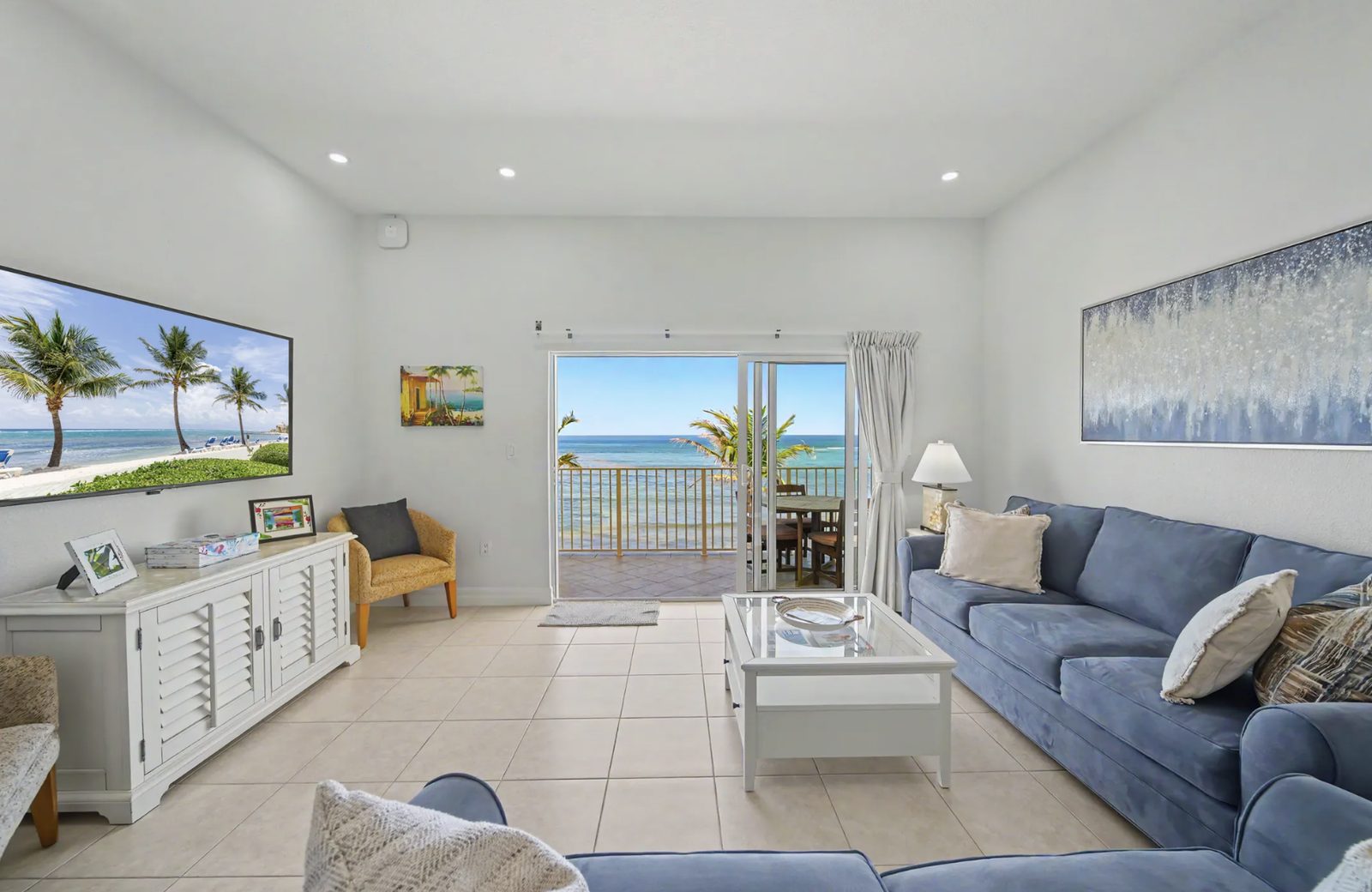
A 2 bedroom 2 bath for $575,000 in Castaways' Cove condominiums in Gun Bay, East End, Cayman Islands.
Market Intelligence · Comparative Ranking · September 2026
The 22 Safe Havens Markets Ranked by Safe Harbor Strength for Americans in 2026

Peter Tumbas
Licensed Connecticut Real Estate Agent · Berkshire Hathaway HomeServices New England Properties · License RES.0836133
Editorial intelligence only. Not legal, tax, or immigration advice. IRS worldwide income reporting obligations apply to all US citizens regardless of where they own property or reside. Engage qualified specialists before making any decision based on this content.
Quick Answer for Americans
Best overall: Cayman Islands. Unrestricted freehold ownership, zero property, capital gains, or income tax, a currency fixed to the US dollar since 1974, and English common law title security backed by British Overseas Territory status.
Strongest sovereign nation on the list: Singapore, rated AAA by S&P and ranked 8th of 163 nations on the 2025 Global Peace Index, though a 60% Additional Buyer's Stamp Duty and restrictions on landed property make it a costlier, more restricted entry point than Cayman for a foreign buyer specifically.
Use this ranking to weigh institutional safety on its own terms, separate from lifestyle, yield, or residency convenience. A market can rank lower here and still be the right personal or investment fit; the two questions are related but distinct.
This ranking covers all 22 markets across the Safe Havens network, the 18 town-card markets on this platform plus Dubai, the Algarve, Phuket, and Italy, each with its own dedicated site. Ranked purely as safe harbors, meaning geopolitical stability, legal protection for foreign property titles, banking infrastructure, and resilience of asset value, they are not equal, and treating them as interchangeable does a disservice to anyone placing real capital. What follows is a tiered ranking with the reasoning and sourcing behind each placement, not a popularity list.
How this ranking was built
Four inputs anchor every placement below. Sovereign credit ratings from S&P, or Moody's where S&P coverage is unavailable, stand in for institutional and banking-system reliability. The 2025 Global Peace Index (163 countries ranked) informs the stability read for sovereign nations. Legal system type, common law versus civil law, and the depth of the title-registration regime inform the property-protection read. And for the British Overseas Territories and Commonwealth realms on this list, that constitutional relationship to the UK, including Privy Council appeal in some cases, is weighed as a distinct institutional backstop that most sovereign nations do not have.
None of these inputs perfectly captures a single market. Global Peace Index scores factor in domestic crime and incarceration statistics, and small offshore territories are not individually scored by it at all. Sovereign ratings measure government creditworthiness, not the security of a private property title. Where a market's rank depends on judgment rather than a clean index number, that reasoning is stated explicitly rather than presented as a precise score it is not.
Tier One: The strongest safe harbors
1. Cayman Islands. The strongest safe harbor on this list. Foreign buyers hold unrestricted freehold title with no ownership caps, and the market carries zero property tax, capital gains tax, or income tax of any kind. The Cayman Islands dollar has been fixed at 1 KYD to 1.20 USD since April 1, 1974, per the currency's own official history, which functionally removes currency risk for an American buyer. As a British Overseas Territory, Cayman sits under English common law with the UK as ultimate constitutional backstop, and its financial sector was removed from the EU list of non-cooperative tax jurisdictions after tightening its transparency regime. Moody's rates Cayman Aa3.
2. Singapore (comparison market, no dedicated town card). Rated AAA by S&P, the highest possible sovereign grade, and ranked 8th of 163 nations on the 2025 Global Peace Index. Singapore is the single strongest sovereign nation this platform covers, full stop. It ranks below Cayman here only because it is a sovereign, not a foreign-ownership-friendly offshore jurisdiction in the same sense: landed property is largely restricted to citizens, and foreign buyers face a 60% Additional Buyer's Stamp Duty on residential purchases as of 2026, a real cost that materially changes the entry calculus even though it says nothing about the safety of the title itself.
3. Turks and Caicos. The other British Overseas Territory on this list, and the only market here that uses the US dollar directly as its official currency rather than pegging to it, eliminating currency risk entirely rather than merely fixing it. Rated A− by S&P. Same English common law and UK constitutional backstop as Cayman, with a smaller, less deep financial sector. This platform has separately reported that TCI's residential market has slowed even as its investment pipeline exceeds $6.3 billion, a market-cycle observation distinct from its institutional standing.
4. London. Rated AA by S&P, ranked 39th of 163 on the Global Peace Index, a middling number for a G7 nation that reflects domestic crime and incarceration statistics more than any question of state stability. England's common law and title-registration system is arguably the deepest and most litigated in the world, dating back centuries, and the British pound remains a major reserve currency. London's real estate depth and liquidity are unmatched by anything else on this list.
5. Dubai (dubaiforamericans.com). The UAE carries an AA rating with a stable outlook from S&P as of March 2026, applied at both the federal and Abu Dhabi level, on the strength of what S&P itself calls the country's "massive fiscal and external reserves." The UAE dirham has been fixed to the US dollar at 3.6725 since 1997. Dubai carries zero income tax, capital gains tax, or annual property tax for owners. Set against that: foreign freehold ownership is limited to designated freehold zones rather than available nationwide, the UAE is a federal absolute monarchy rather than a parliamentary democracy, and the country ranks only 52nd of 163 on the 2025 Global Peace Index, the weakest peace ranking of any Tier One market here. Rated on institutional and currency strength alone Dubai would sit even higher; the governance-model and Peace Index gap is why it closes out Tier One rather than sitting above London.
If institutional stability is your primary filter, submit a private inquiry and Peter will walk through how the Tier One markets compare for your specific goals, at no cost to you. Referral fees are paid by the receiving agent at close. Start here.
Tier Two: Strong, with one factor to weigh
6. Niseko. Rated A+ by S&P, ranked 10th of 163 on the Global Peace Index. Japan offers foreigners essentially unrestricted freehold ownership, unusual globally, backed by a deep and heavily regulated banking system and a currency issued by one of the world's most established central banks. The one structural gap, covered in depth elsewhere on this platform, is that Niseko offers no residency pathway tied to property, and its ski-resort economy carries a more seasonal, tourism-dependent demand base than Tokyo's.
7. Tokyo. Same sovereign profile as Niseko, A+ by S&P, 10th of 163 on the Global Peace Index, unrestricted freehold, and no property-linked residency route. Tokyo's advantage over Niseko is liquidity: a deep, year-round urban rental and resale market rather than a seasonal resort economy, which is why it ranks a notch above.
8. Lisbon. Rated A+ by S&P and ranked 7th of 163 on the Global Peace Index, the best peace ranking of any European market on this list. Full EU and NATO member with a centuries-old civil law notarial title system and the euro as currency. Strong across every metric here.
9. Algarve (algarveforamericans.com). Same Portuguese sovereign profile as Lisbon, A+ by S&P and 7th of 163 on the Global Peace Index, and the same EU, NATO, and eurozone membership. The honest caveat specific to the Algarve: Portugal eliminated the real-estate purchase route to its Golden Visa residency programme in October 2023 under the "Mais Habitação" housing law. Ordinary property purchase for lifestyle or investment was not affected, and Portugal's fund-investment, capital-transfer, and job-creation Golden Visa routes remain open, but a buyer should not assume property purchase alone still confers residency eligibility.
10. Marbella (Spain). Rated A+ by S&P, ranked 27th of 163 on the Global Peace Index. Full EU and NATO member, well-established civil law property system with deep foreign-buyer infrastructure built over decades on the Costa del Sol specifically.
11. Malta. Rated A− by S&P. Full EU and NATO member with English as an official language and a legal system carrying British-derived elements. This platform's own Malta coverage has flagged the market's small size and comparatively thinner liquidity as the honest trade-off against its EU-residency accessibility; that liquidity point, not institutional weakness, is what places it here rather than higher in Tier Two.
Tier Three: Solid, with a specific caveat worth knowing
12. Italy (italiaforamericans.com). Rated BBB+ by S&P with a positive outlook as of January 2026, following an upgrade from BBB in 2025, and ranked 33rd of 163 on the 2025 Global Peace Index, the third-best peace ranking of any European market on this list after Portugal and the UK. Full EU, NATO, and eurozone member with a well-established civil law title system. Italy's rating sits a full tier below the A+ markets above it, the reason for its placement in Tier Three despite its strong peace ranking and improving credit trajectory.
13. Uruguay. Rated BBB+ by S&P, investment grade, and ranked 44th of 163 on the Global Peace Index, the strongest showing of any Latin American market this platform covers. Long, uninterrupted democratic tradition and a well-established civil law property registration system.
14. France (comparison market, no dedicated town card). Rated A+ by S&P, matching Spain and Portugal, but ranks only 99th of 163 on the Global Peace Index, a genuinely surprising gap for a market with this platform's deepest, oldest continuous civil law title system, the Napoleonic Code notarial tradition. The Global Peace Index's inclusion of protest frequency and incarceration statistics accounts for most of that gap; it is a real data point worth knowing even though it does not track directly to title security.
15. Greece (Athens). Rated BBB by S&P, the lowest investment-grade tier among the European markets here, and ranked 49th of 163 on the Global Peace Index. Full EU and NATO member with an active Golden Visa programme. The specific, honest caveat: Greece's national land registry (Ktimatologio) has historically had gaps in fully documented, formally surveyed title in parts of the country, an ongoing modernization effort rather than a resolved one, and worth confirming property-by-property with a Greek notary.
16. Costa Rica (comparison market, no dedicated town card). Rated BB by S&P, below investment grade, and ranked 54th of 163 on the Global Peace Index. Costa Rica has had no standing army since abolishing it constitutionally in 1948, which removes one category of political risk entirely, but its sub-investment-grade sovereign rating is the honest signal of a smaller, more volatile fiscal position than the Tier One and Tier Two markets.
17. Oman (Muscat). Rated BBB− by S&P, the lowest rung still inside investment grade, and ranked 51st of 163 on the Global Peace Index. An absolute monarchy rather than a parliamentary democracy, currently stable but structurally different in governance model from every other market above it. Foreign freehold is limited to designated Integrated Tourism Complexes rather than available nationwide, a structural gap this platform has covered directly in Oman vs. Dubai. The Omani rial is pegged to the US dollar, a stabilizing offset.
"None of the markets in Tier Three are unsafe. Every one of them is a functioning, established real estate market this platform covers for good reason. What separates them from Tier One and Two is one specific, nameable factor, a lower sovereign rating, a title-registry gap, a governance-model difference, not a vague sense that they're riskier. If you know exactly what the trade-off is, you can decide whether it matters for your situation."
Tier Four: Solid legal systems, a live geopolitical or structural risk to weigh
18. Montenegro. Rated B+ by S&P, sub-investment-grade, though ranked a respectable 31st of 163 on the Global Peace Index. A NATO member since 2017 but not yet an EU member, Montenegro uses the euro unilaterally without formal eurozone membership, meaning it has no seat at the European Central Bank and no access to ECB lender-of-last-resort support if its banking system were ever under stress, a structural quirk worth understanding rather than a live crisis.
19. Bangkok (comparison market, no dedicated town card). Rated BBB+ by S&P but ranked only 101st of 163 on the Global Peace Index, reflecting a history of military coups, the most recent in 2014, and an ongoing insurgency in its southern provinces, geographically remote from Bangkok itself. Foreign ownership is restricted to condominiums under a 49% foreign-quota cap per building, with no foreign land ownership permitted, a structural gap covered in this platform's Bangkok vs. Singapore analysis.
20. Phuket (phuketforamericans.com). Same Thai sovereign profile as Bangkok, BBB+ by S&P, 101st of 163 on the Global Peace Index, the same coup history, and the identical 49% foreign-ownership quota on condominiums with no foreign land ownership permitted. Phuket carries one additional, honest structural factor Bangkok does not: it was directly struck by the December 2004 Indian Ocean tsunami, and coastal property there sits in a documented natural-disaster risk zone that an inland capital-city market does not share. That combination of political and natural-hazard risk places it a notch below Bangkok.
21. Antigua and Barbuda. Not individually rated by S&P. A Commonwealth realm with the UK Privy Council as final court of appeal, a genuine institutional backstop most nations lack. The material, current development: in June 2026 the European Commission sent Antigua and four other Eastern Caribbean nations formal letters demanding they end their citizenship-by-investment programmes by June 2028 or face suspension of Schengen visa-free access, under a mechanism the EU adopted in November 2025, per reporting from IMI Daily. Prime Minister Gaston Browne has publicly resisted a unilateral phase-out. This threatens the citizenship programme specifically, not ordinary property ownership, but it is a live, dated political risk that belongs in any honest stability assessment.
22. St Kitts and Nevis. The same facts apply as Antigua: not individually rated by S&P, a Commonwealth realm with Privy Council appeal, and one of the five nations named in the EU's June 2026 warning on citizenship-by-investment. St Kitts operates the world's oldest active CBI programme, dating to 1984, which cuts both ways: decades of institutional track record, but also the longest-running example of exactly the model now under EU pressure.
A Note on How This Works
Peter connects serious American buyers with vetted agents, notaries, and advisors in every market above. There's no fee to you, referral compensation is paid by the receiving agent at close. If you want to talk through which tier fits your specific goals, request a private inquiry at safehavensforamericans.com/pages/contact.
Request a Private InquiryFrequently asked questions
Which Safe Havens market ranks first as a safe harbor for Americans?
The Cayman Islands. Unrestricted freehold ownership, zero property, capital gains, or income tax, a currency fixed to the US dollar since April 1974, and English common law title security backed by British Overseas Territory status.
What does safe harbor mean in international real estate?
A country or territory offering high geopolitical stability, robust legal protections for foreign property titles, strong banking infrastructure, and resilient asset value, distinct from lifestyle, yield, or residency convenience, which are separate questions this platform covers market by market.
How does Dubai rank as a safe harbor compared to the Cayman Islands?
Dubai's sovereign, the UAE, carries an AA rating from S&P and a dirham fixed to the US dollar since 1997, both strong marks. But foreign freehold is limited to designated zones rather than available nationwide, the UAE is an absolute monarchy rather than a parliamentary democracy, and its Global Peace Index rank (52nd of 163) trails the Cayman Islands' profile as a British Overseas Territory under English common law. That combination places Dubai at the bottom of Tier One rather than above London.
Why do the Caribbean citizenship-by-investment markets rank lower on this list?
Antigua and Barbuda and St Kitts and Nevis both received formal EU letters in June 2026 demanding they end citizenship-by-investment by June 2028 or face Schengen visa suspension. This threatens the passport programme, not ordinary property ownership, but it's a live, dated political risk that belongs in an honest stability assessment.
Last updated: September 2026. Sovereign credit ratings, Global Peace Index rankings, and geopolitical developments referenced above are current as of publication and subject to change; verify current standing directly with the cited sources before relying on any figure. Not legal, tax, or immigration advice. IRS worldwide income reporting obligations apply to all US citizens regardless of where they own property or reside.
About the Author. Peter Tumbas is a licensed Connecticut real estate agent with Berkshire Hathaway HomeServices New England Properties (License RES.0836133). He focuses on offshore real estate, safe-haven strategy, and helping high-net-worth Americans evaluate international markets for residency, tax efficiency, and capital preservation. This ranking covers all 22 markets across the Safe Havens network, evaluated using the same analytical approach as private wealth offices.
Ready to compare markets directly?
If you're a high-net-worth American weighing capital placement across any of these markets, submit a private inquiry here: safehavensforamericans.com/pages/contact. You can also call 412-225-0598 or email petertumbas@bhhsne.com directly. No cost to you, referral fees are paid at close by the receiving agent.
Submit a Private InquiryRelated reading: How Peter Tumbas Evaluates International Markets · Cayman Islands vs. Dubai: Two Different Bets on Zero Tax · Antigua vs. Cayman Islands for Americans · Oman vs. Cayman Islands for Americans